
February 6, 2026
Early mornings in pest control often look the same. One owner starts the day sorting through handwritten job forms, juggling spreadsheets, and returning customer calls that came in overnight.
Another owner, running a business of a similar size, opens a dashboard and immediately sees scheduled pest control jobs, technician routes, and customer updates in one place using pest control computer software.
Both are experienced professionals, but only one has real-time visibility into daily operations. That visibility saves time, reduces costly errors, and supports better decisions that directly affect profit.
If you're the kind of person who wants to run your business smarter, this blog will help you.
How Modern Service Teams Use Pest Control Computer Software in Real Time?
Modern pest control teams use real-time computer software to instantly synchronize office dispatchers with field technicians, optimizing routing, automating customer communication, and managing job data on mobile devices. However, using a pest control computer software has more to it.
Therefore, this blog explores how pest control computer software supports modern service teams operating in real-world conditions. You'll see how pest control businesses move away from paper-based work orders, spreadsheets, and disconnected tools toward digital-first operations.
We'll cover job management, scheduling, routing, inspections, billing, customer communications, and reporting in practical terms. You'll also learn why outdated systems quietly slow growth and how software supports smarter decisions as teams expand.
This topic matters now because customer expectations are higher, competition is stronger, and efficiency gaps surface faster than ever. By the end, you'll understand how pest control software fits into everyday operations for small and growing teams.
Key Takeaways
- Manual processes fade once everything updates in real time.
- Digital-first systems keep teams organized and prevent paperwork from disappearing during busy service days.
- Scheduling, routing, and billing automation mean less office chaos and quicker payments.
- With better visibility and fewer repetitive tasks, pest control businesses grow without piling on extra overhead or stress.
How Do Digital-First Pest Control Operations Actually Run Behind the Scenes?
Digital-first pest control operations are built around clarity instead of constant follow-ups. Job management, scheduling, inspections, and customer information live in one system, allowing office teams to track work while technicians update jobs in real time from the field.
This reduces delays caused by calls, paperwork, and manual updates. Real-time visibility into routes, technician availability, and job progress helps teams respond faster and work more efficiently during busy seasons.
If you've ever wondered how all this fits together during a regular service day, seeing it in action will answer that question right away.
What Challenges Do Pest Control Companies Face as They Grow?
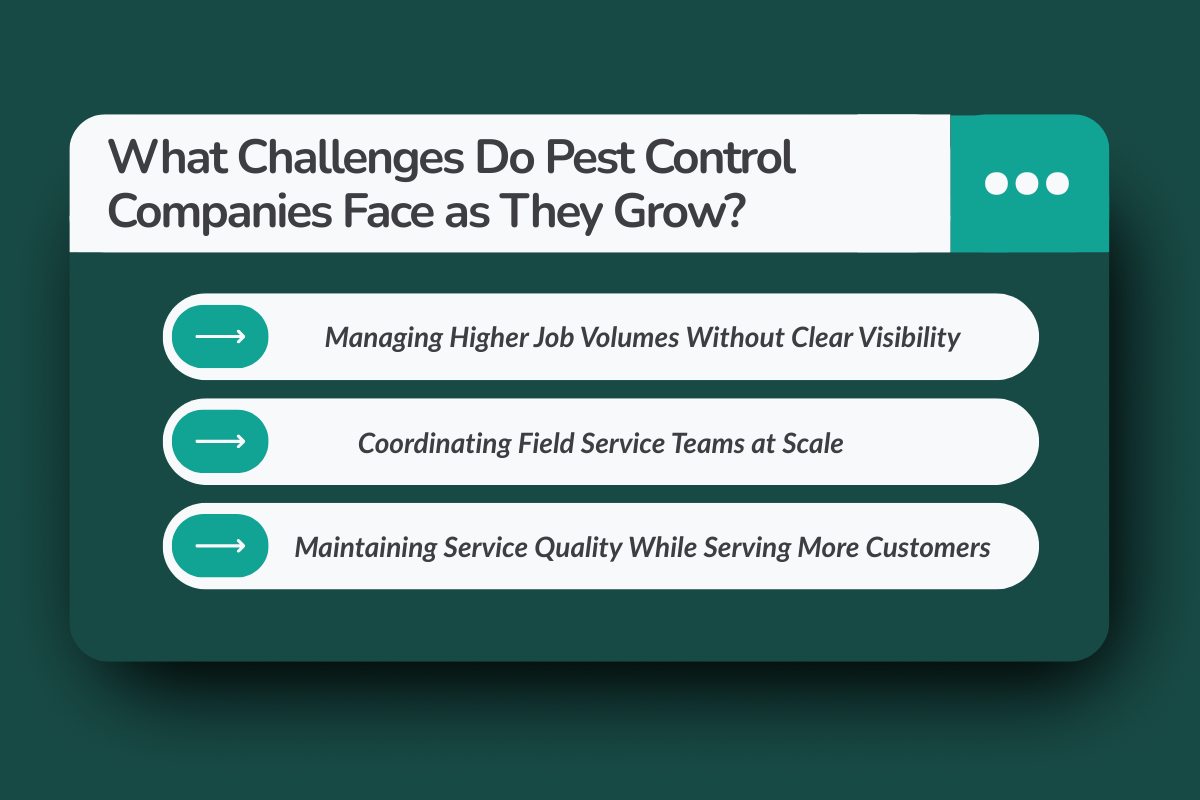
Growth brings more customers, more technicians, and more complexity across daily operations. Systems that worked when the pest control business was smaller often struggle under higher volume and tighter schedules. These challenges appear gradually, mainly when teams rely on manual coordination.
Also, as pest control companies grow, generating more customer reviews becomes essential to enhance reputation, attract new business, boost local SEO rankings, and drive sales.
1. Managing Higher Job Volumes Without Clear Visibility
As pest control jobs increase, tracking status becomes difficult without centralized job management. Office teams lose visibility into what's completed, delayed, or rescheduled during the day.
Service history becomes fragmented across tools, slowing customer responses and increasing follow-up calls.
2. Coordinating Field Service Teams at Scale
Scheduling becomes more complex as teams grow and service areas expand. Without pest control routing software, technicians experience inefficient routes and uneven workloads. This directly affects efficiency, fuel costs, and technician morale over time.
3. Maintaining Service Quality While Serving More Customers
Inconsistent documentation creates operational risk. Missing inspection details and incomplete job forms increase customer dissatisfaction and compliance issues.
Standardized pest control software helps maintain service quality and consistency across every technician and visit.
Why Pest Control Teams Are Moving Away From Manual Systems?
Manual systems don't break suddenly; they quietly slow operations as workload increases over time.
Paper-based processes and spreadsheets become increasingly challenging to manage as jobs, customers, and technicians multiply across service areas.
Over time, these inefficiencies compound and limit growth and visibility, leading many teams to explore what pest control software is and how it replaces daily operations.
1. Paper-Based Job Forms and Manual Processes
Paper job forms are easy to lose and hard to audit across multiple jobs and locations. Missing paperwork delays invoices and creates compliance risks, especially when tracking pesticide usage accurately.
Office work becomes reactive rather than proactive, increasing stress on administrative teams.
2. Disconnected Office and Field Operations
When office staff and technicians use separate tools, updates rely on calls and texts throughout the day. Information gets duplicated or missed entirely, causing delays and confusion.
Pest control management software keeps everyone aligned with shared, real-time data and consistent workflows, helping teams stay connected throughout the workday.
How Pest Control Business Software Changes Daily Field Service Work?
Pest control business software offers comprehensive solutions for daily field service work, changing how work flows through the company from start to finish, creating a more predictable, organized service process.
Instead of chasing updates, calls, or paperwork, teams operate with shared, real-time information across both office and field teams. This shift improves scheduling accuracy, inspection consistency, billing speed, and customer communication at every stage of daily operations.
1. Centralized Job Management and Scheduling
Jobs are created, assigned, and tracked digitally in a single system accessible to the entire team. Pest control scheduling software automatically updates calendars, reducing missed appointments, overlaps, and last-minute confusion.
Office teams always know job status at a glance, without relying on manual check-ins or follow-up calls.
2. Mobile-First Field Service Management Software
Technicians access job details, inspections, and customer information on mobile devices while on-site at each location.
Photos, notes, and digital signatures are captured during service visits and synced to the office instantly. This improves accuracy, accountability, and record-keeping across all jobs and service visits.
3. Faster Job Completion With Less Administrative Work
Automation reduces repetitive tasks tied to paperwork, forms, and manual data entry throughout the workday by allowing pest control software to handle them. Technicians focus on pest control services rather than on forms or office follow-ups after each job.
Office teams spend less time correcting errors and more time supporting customers and scheduling new work efficiently. Automating processes with pest control software saves time and helps win more sales.
For example, a pest control company in San Francisco adopted PestBase to centralize scheduling and field updates, reducing missed appointments and administrative work. This led to faster job completion and smoother coordination between the office and technicians.
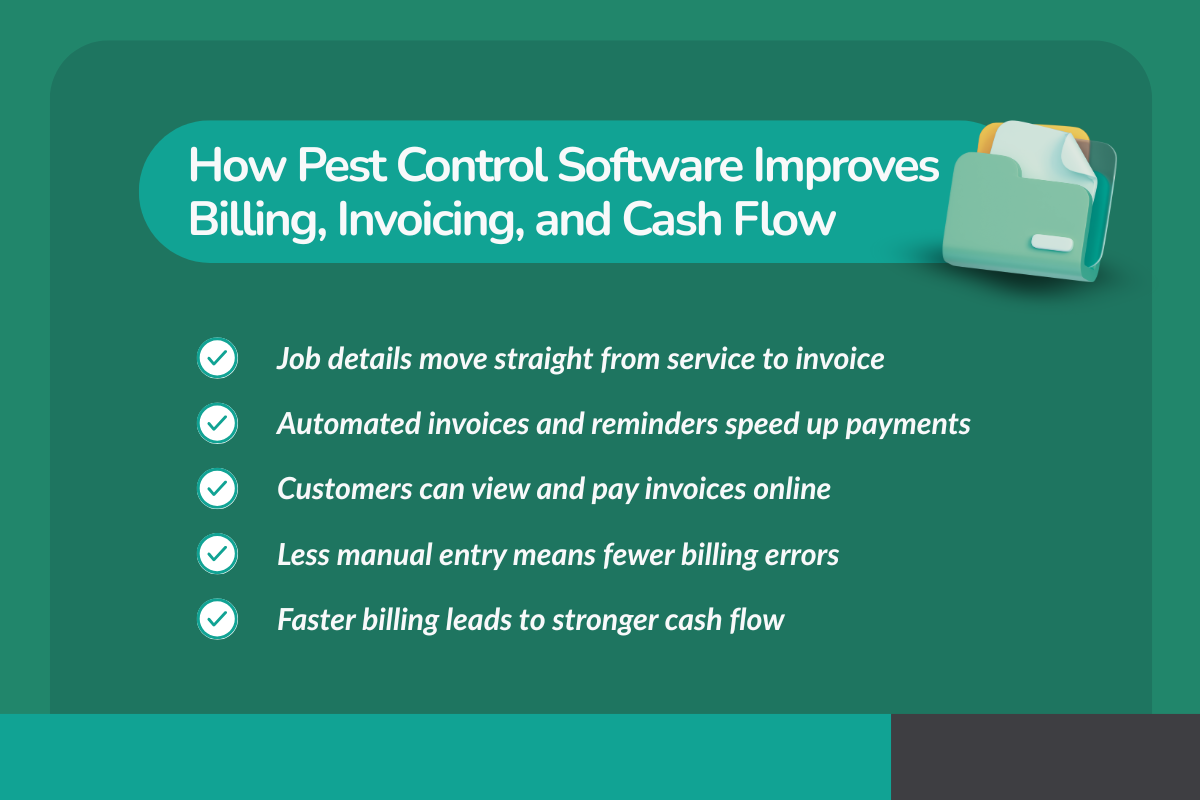
How Pest Control Software Improves Billing, Invoicing, and Cash Flow?
Billing issues often begin in the field. Missing job details delays invoices and payments. Pest control service software links completed work directly to invoicing.
- Automated invoices, payment reminders, and online payments help businesses get paid faster.
- A customer portal enables clients to view invoices, make payments, and access service information at any time, thereby improving customer service.
- Using pest control software can also improve customer service and reach more homeowners with infestations, thereby increasing revenue.
Many pest control companies improve cash flow simply by eliminating delays caused by manual entry. Faster billing also reduces disputes and enhances client trust.
If you want to see how faster billing actually works in day-to-day operations, understanding Pest Control Software That Streamlines Scheduling, Routing & Billing makes the impact immediately clear.
The Role of Reporting and Data in Smarter Pest Control Decisions
Reporting turns daily activity into insight. Instead of guessing which services perform best, managers review reports on job volume, technician productivity, and revenue trends.
Moreoever, AI-powered reporting is becoming more common in pest control software. These tools identify seasonal demand patterns and highlight inefficiencies without manual analysis. Better data supports better decisions and protects profitability.
Manual Operations vs Pest Control Computer Software: A Practical Comparison
Both manual systems and software-based operations get work done, but the experience is very different.
Manual processes rely on memory and follow-ups, while software relies on shared data. The difference becomes more noticeable as operations grow.
| Area | Manual Operations | Pest Control Computer Software |
|---|---|---|
| Job Tracking | Paper notes and spreadsheets that must be updated manually | Real-time job management with live status updates |
| Scheduling | Phone calls, wall calendars, and manual coordination | Automated scheduling that adjusts as jobs change |
| Inspections | Paper job forms that are easy to lose or misfile | Digital inspections stored securely with photos and notes |
| Billing | Manual invoices are created after jobs are completed | Automated invoicing is triggered immediately after the service |
| Visibility | End-of-day updates and delayed reporting | Live operational data available throughout the day |
Integrating your website with pest control software enables customers to submit online requests and use lead-generation tools, increasing inquiries and conversions.
Over time, seeing job progress, technician workload, and billing in real time becomes a competitive advantage, improving efficiency, planning, customer communication, and growth.
How Small and Mid-Sized Pest Control Businesses Benefit the Most?
Small and mid-sized pest control businesses often see the fastest results from software adoption. Clear job management helps new technicians onboard faster and follow consistent service processes without constant oversight.
Centralized operations reduce office workload without hiring more staff, especially during busy seasons when calls and scheduling increase. Many small businesses use pest control computer software to compete with larger companies while staying efficient.
Staying organized allows them to handle more jobs, serve more customers, and maintain consistent service quality. This balance supports sustainable growth without burnout and keeps daily operations under control.
How Customer Portals and Customer Communications Improve Daily Operations?
Customer communication is a major driver of customer satisfaction. Automated appointment reminders, including sending reminders and technician ETA notifications, keep customers informed, reduce no-shows, and minimize uncertainty around arrival times.
Customer portals allow clients to access service history, invoices, and inspection reports. This transparency reduces incoming calls and follow-up emails for office teams and builds trust. Over time, better communication leads to repeat customers and stronger reviews.
For teams seeking to deepen their knowledge, Pest Control CRM: How to Convert More Leads & Retain Customers provides valuable insights.
How Pest Control Software Supports Marketing, More Leads, and Business Growth?
Efficient operations support marketing indirectly. When scheduling is reliable and service quality is consistent, customer referrals increase naturally without extra marketing spend.
Happy clients are more likely to leave positive reviews and recommend services. Accurate customer information helps teams follow up with potential customers and manage leads effectively.
Pest control software allows businesses to grow steadily without overwhelming daily operations or stretching internal resources.
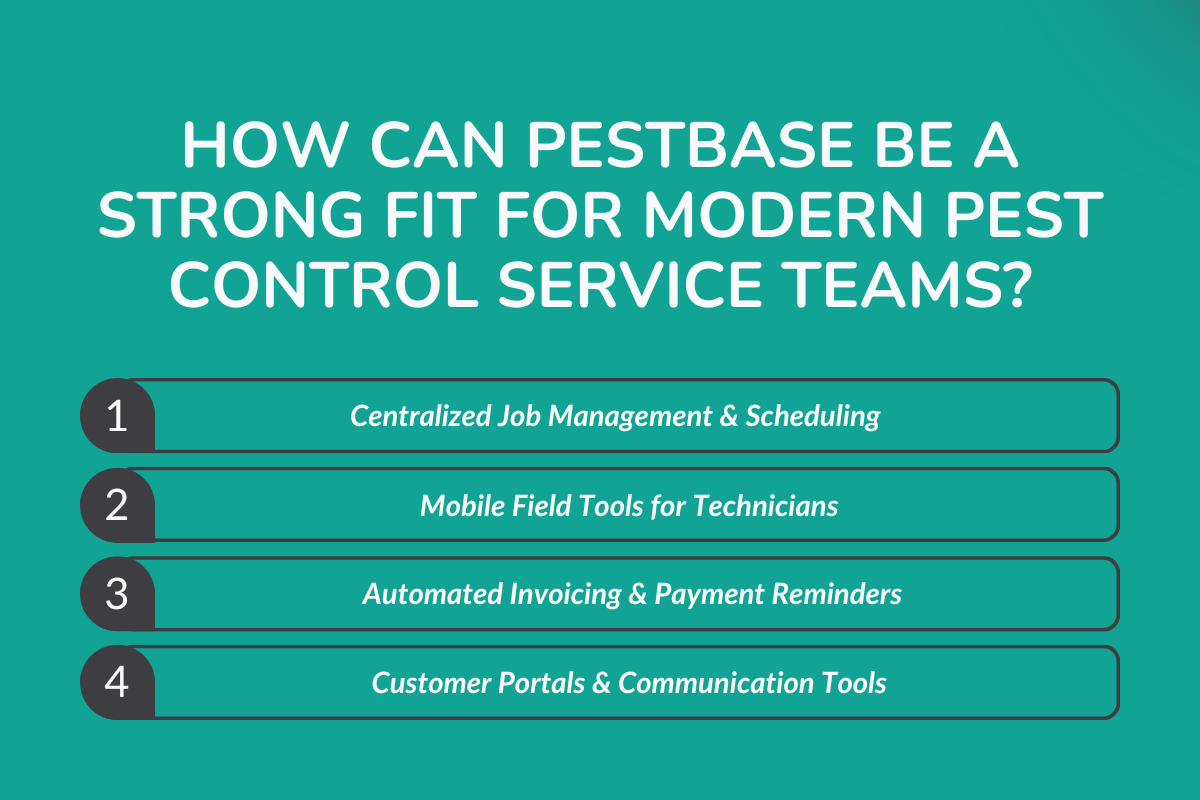
How Can PestBase Be a Strong Fit for Modern Pest Control Service Teams?
PestBase is software designed specifically for pest control companies, built around how these businesses actually operate rather than generic field service assumptions.
It focuses on integrating job management, inspections, billing, and customer data into a single system. This structure supports clarity, accuracy, and scalability for modern service teams.
Core capabilities of PestBase include:
- Centralized Job Management & Scheduling that keeps office teams and pest control technicians aligned with real-time updates and fewer scheduling conflicts.
- Mobile Field Tools for Technicians to complete pest control inspections, capture photos, fill job forms, and update job details directly from the field.
- Automated Invoicing & Payment Reminders that support faster payments, reduce missed invoices, and maintain cleaner accounting records.
- Customer Portals & Communication Tools that give customers access to service history and invoices while reducing follow-ups and office workload.
These features support daily operations without forcing teams to change their workflows overnight, which is precisely how PestBase is designed to fit into existing pest control workflows.
Final Takeaway on Pest Control Computer Software
Outdated tools quietly limit efficiency and growth. Pest control computer software replaces guesswork with visibility and structure across teams.
For modern service teams, it supports consistency, efficiency, and more intelligent decisions across daily operations, inspections, billing, and customer communications without adding operational complexity.
Why Choose PestBase for Your Pest Control Business?
PestBase offers comprehensive solutions for pest control companies, supporting real-world pest control workflows without unnecessary complexity or rigid processes. It helps teams manage jobs, technicians, invoices, and customer communications from one platform.
For growing businesses, this clarity reduces friction, improves coordination, and supports long-term operational stability as service demand increases. Book a demo to see how PestBase helps teams stay coordinated without adding operational complexity.
Frequently Asked Questions
1. What is pest control computer software used for?
Pest control computer software provides solutions for managing scheduling, jobs, inspections, technicians, invoicing, and customer information from a centralized system, improving efficiency and organization.
2. How does pest control business software improve technician productivity?
By reducing paperwork and manual updates, pest control business software provides technicians with precise job details, mobile access, and structured workflows, enabling them to focus on service delivery.
3. Why is field service management software essential for pest control companies?
Field service management software keeps teams connected in real time, reducing miscommunication, scheduling errors, delays, and operational gaps during pest control operations. It streamlines workflows, improves efficiency, and supports growth for pest control companies of any size.
4. How does pest control software improve customer satisfaction?
Automated reminders, transparent technician updates, accurate records, and a 24/7 customer portal boost reliability, transparency, and satisfaction by making communication, data access, and account management easier, building customer trust.
5. Why do growing pest control companies move away from manual systems?
Manual systems don't scale well, leading to missing paperwork, delays, limited visibility, and bottlenecks as pest control companies grow. Software automates tasks and streamlines operations.
6. Which is the best pest control software available in the industry?
In the mid- to small-size pest control business, PestBase stands out as a preferred solution because it is built specifically for pest control workflows. In the large-enterprise space, including multi-location companies in tech hubs like San Francisco, platforms such as ServiceTitan or FieldRoutes are typically used.