
March 24, 2026
Running a pest control business isn’t just about battling bugs; it’s also about handling the paperwork and regulations that come with the territory.
After a long day in the field, the last thing any technician wants is to deal with paperwork, logs, and compliance checks. But in this industry, missing even a small detail can turn into a serious problem.
The risk is real and often underestimated:
- One missed chemical log → failed audit.
- One unsigned service report → payment delay.
- One incomplete record → lawsuit vulnerability.
These are not rare situations. They happen when reporting depends on manual processes, scattered notes, or memory. Modern exterminator software removes this risk by turning field reporting into a structured, automated process.
How Does Exterminator Software Improve Field Reporting and Compliance?
Field reporting in pest control is where most compliance risks begin. When technicians rely on paper forms, memory, or scattered notes, small gaps in documentation quickly turn into audit issues, payment delays, or legal exposure.
Exterminator software changes this by turning reporting into a structured, real-time process. Every job is logged with accurate details, timestamps, photos, and signatures, ensuring nothing is missed, and every record is audit-ready without extra effort.
This blog shows how exterminator software (like PestBase) keeps your pest control company audit-ready by generating compliance-ready reports on the go. It highlights built-in digital forms and real-time data storage that streamline inspections and reduce the risks of errors.
Key Takeaways
- Poor documentation does not just create small issues; it can cost you money through fines, payment delays, and legal problems.
- Paper reporting may work when you are small, but it often breaks down as your team grows and mistakes start to increase.
- Digital field sales tools automatically record chemicals used, timestamps, photos, customer signatures, and job details so nothing gets missed.
- Clean and organized digital reports also make your company look more professional and trustworthy to attract more customers.
- In simple terms, strong compliance documentation protects your cash flow and shields your business from risk.
See how modern exterminator software can turn your reporting into a reliable, audit-ready system without adding extra work. Book a demo with PestBase and experience how structured workflows, real-time data, and automated compliance can protect your revenue and simplify your operations
The Real Cost of Poor Field Documentation in Pest Control
1. Audit Failures & State Compliance Risks
Regulators can inspect your pest control business anytime. Missing or incomplete records of new customers or commercial accounts immediately raise concerns. Common audit issues include:
- Missing pesticide usage logs: No proper chemical logs can lead to failed inspections and fines.
- Incomplete application records: Every job must show product name, dosage, location, and customer information. Missing even one detail can cause failure.
- No technician license tracking: Inspectors expect proof that certified pest control operators performed the work.
2. Chargebacks & Payment Disputes
Weak documentation does not just create compliance issues; it directly impacts your cash flow. When proof of service is unclear or missing, customers are more likely to delay or dispute payments.
Common problems include:
- “We never received that treatment.”: Without proof, you may lose the payment.
- Missing signatures: No signed report means customers can delay or refuse invoices.
- No before-and-after photos: Without visual proof, it is hard to defend your work.
Clear, time-stamped documentation or digitally signed copies on the customer portal protect your revenue and reduce disputes.
3. Liability Exposure (The Hidden Legal Threat)
Poor records also increase legal risk, especially when disputes escalate beyond simple complaints. Documentation becomes your only defense when claims are made against your work.
Examples include:
- Property damage claims: Detailed service logs prove pest activity; what was done.
- Health-related complaints: Courts will request complete chemical records.
- HOA compliance disputes: Associations often require documented proof of approved treatments.
When you cannot prove your work, it is often treated as negligence. That can lead to penalties, lawsuits, or license issues.
Why Paper Systems Break at 5+ Technicians?
Paper-based systems might work when you have two or three technicians. But once your team grows beyond five, small inefficiencies start turning into daily operational problems.
I. Inconsistent Reporting
Each technician fills out forms in their own way, which creates inconsistency across reports. Without standard templates, important details are often skipped or recorded incorrectly.
Over time, this makes it difficult to maintain accurate records. It also increases the risk of compliance issues and audit failures.
II. Lost or Delayed Tickets
Paper forms often get misplaced, damaged, or left behind in trucks. As a result, the office has to wait for reports before processing invoices or updating records.
This delay slows down the entire billing cycle. It also impacts cash flow and creates unnecessary follow-ups between teams.
III. No Real-Time Visibility
Managers cannot track chemical usage, job status, or technician activity in real time. They only see updates once the paperwork reaches the office. By that point, it is often too late to fix mistakes or missing details. This lack of visibility makes it harder to control operations and maintain compliance.
Table: Paper vs Digital Field Reporting
| Documentation Area | Paper System | Modern Exterminator Software |
|---|---|---|
| Chemical Logs | Manual, error-prone | Auto-logged + timestamped |
| Technician Signatures | Physical only | Digital + GPS-verified |
| Audit Readiness | Reactive | Always audit-ready |
| Photo Documentation | Rare | Required field upload |
| Reporting Access | Office-only | Web-based |
What Modern Exterminator Software Actually Fixes? (From a Compliance Perspective)
1. Digital Chemical Usage Logs (EPA & State-Ready)
This is one of the biggest compliance upgrades. It ensures every chemical used is properly recorded without relying on manual entries or memory.
- Built-in product lists: Technicians and solo operators select pesticides from a preset database. This prevents spelling mistakes and ensures EPA details are correct.
- Automatic quantity tracking: Dosage and amounts are logged inside the system. No need to look for details later.
- Time-stamped records: Every application shows the exact date, time, and technician name.
The result is simple. Your chemical logs are complete, consistent, and ready if an inspector asks. No rewriting records. No worries during audits with business management software.
2. GPS-Verified Service Reports
Disputes often come down to one key question. Was the technician actually present at the service location?
- Location tracking: The system captures GPS coordinates when the job is completed.
- Time verification: Reports include exact timestamps.
If a customer claims a service or one-time appointment was missed, you have clear evidence. The technician was on-site, and the job was completed as recorded.
This pest control routing software removes guesswork from disputes. It also protects your revenue by providing verifiable proof of service.
3. Required Field Completion Logic
Most compliance issues happen because something was forgotten. The best pest control software removes that risk.
- Photo uploads required: No job can be closed without before and after images.
- Chemical selection required: The tech must log products and quantities used.
- Digital signature required: The customer must sign before the report is finalized.
The system simply does not allow incomplete jobs to be submitted. This reduces follow-up work for the office and eliminates missing information.
At the same time, route optimization ensures technicians complete more jobs efficiently. It helps maintain productivity without compromising reporting accuracy.
4. Automated Service History Archiving
When everything is stored digitally, your records remain organized and easy to access. This removes the need to search through paper files or scattered documents.
- Instant access to full treatment history: You can pull years of service data in seconds and reduce costs.
- Stronger dispute defense: Show exactly what was done, when, and which products were used.
All job data lives in the right software instead of scattered paper files. This makes audits easier and strengthens your position, and also saves time if legal questions ever come up.
Compliance in 2026: What Regulators Expect in Field Service Businesses?
Compliance is not getting easier. Rules are tighter, and digital records are becoming the standard. If you are still relying on paper, the gap between you and what regulators expect is getting wider.
A. Increased Digital Record Expectations
Inspectors and business owners now expect clean, well-organized, and searchable digital logs. Many states already prefer electronic records over paper files, and some are actively moving toward making them mandatory.
If you can pull up chemical usage logs, technician details, invoices, and service history in seconds, you look organized and prepared. If you are flipping through papers, it signals risk.
B. Faster Audit Response Windows
Surprise inspections are becoming more common. When they happen, you often have very limited time to prepare or respond.
Regulators are reviewing records more closely than before. Missing details or delayed responses can lead to fines or deeper investigations. With digital systems, you can export everything instantly. With paper, you are stuck digging through folders and hoping nothing is missing.
C. Multi-Location Documentation Standardization
If you run multiple small businesses or branches, consistency matters more than ever. Regulators expect the same reporting format across all teams. One technician should not be documenting differently from another.
Digital templates make sure every job follows the same structure. No matter who completes the work, the report looks uniform and complete.
How Field Reporting Impacts Customer Trust? (Not Just Compliance)
1. Professional Reports Build Confidence and Happy Clients
Today, customers expect more than a quick verbal summary. They want proof of what was done. A branded digital report with clear before and after photos gives clients confidence. It shows exactly what areas were treated, which products were used, and when the service was completed.
Detailed documentation creates transparency with client relationships. Customers feel they are getting real value, not just a visit. It also sets you apart from companies still handing over handwritten slips or unclear paper receipts.
2. Faster Invoicing Improves Customer Experience
When a job is completed and the invoice arrives immediately, it feels organized and professional. With digital field reporting, reports are submitted instantly from the field. The office can generate and send invoices right away. There is no waiting for paperwork to return to the office.
Companies that automate this process often see fewer payment delays and faster collections. Customers also appreciate receiving clear documentation and billing at the same time.
Real-World Example:
- One mid-size pest control company reduced its billing cycle by nearly one-third after switching to automated reporting and invoicing.
- By connecting service reports, chemical logs, and billing in one system, they eliminated delays caused by missing paperwork. They improved cash flow and delivered quicker confirmations to clients.
Key Features to Look for in Pest Control Software for Compliance
When choosing exterminator software, focus on features that protect your business and simplify compliance. Here is what to look for:
| Feature | What It Does | Why It Matters |
|---|---|---|
| Digital Checklists & Forms | Custom forms for general pest, termite, bed bugs, and more. Guided fields ensure techs enter all required details. | Prevents missing information and keeps reports consistent across all technicians. |
| License & Certification Tracking | Stores technician licenses and certifications in one place with renewal alerts. | Helps avoid expired credentials and costly fines. Keeps you inspection-ready. |
| Chemical Inventory Management | Logs chemical usage automatically and tracks stock levels. | Builds accurate pesticide usage logs and prevents running out of products. |
| Automated Reporting | Generates treatment histories, compliance logs, and formatted audit reports instantly. | Saves admin time and makes audits faster and less stressful. |
| E-Signature & Proof of Service | Captures customer digital signatures on completed jobs. | Provides legal proof of service and reduces billing disputes. |
| Mobile Access & Offline Mode | Works on mobile devices even without internet, syncing later. | Ensures no data is lost in the field due to a weak signal. |
| Notifications & Alerts | Sends reminders for license renewals, compliance deadlines, and reporting tasks. | Keeps you proactive so nothing slips through the cracks. |
Industry Stats: How Pest Control Software Is Used Today?
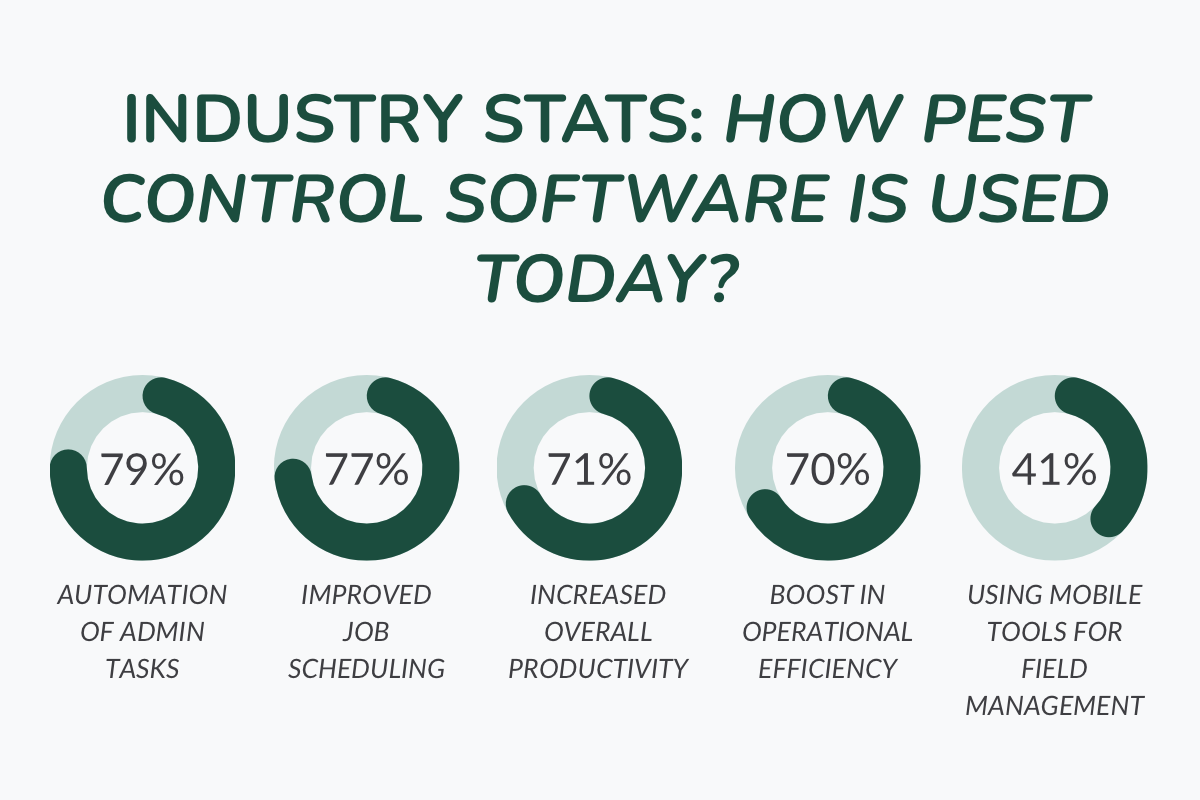
Reported Benefits of Pest Control Software
| Reported Benefits | Percentage of Companies |
|---|---|
| Automation of admin tasks | 79% |
| Improved job scheduling | 77% |
| Increased overall productivity | 71% |
| Boost in operational efficiency | 70% |
| Using mobile tools for field management | 41% |
How to Evaluate If Your Current System Is a Liability or Not?
Quick diagnostic checklist:
Take a hard look at how your reporting works today. A few simple questions can tell you a lot.
- Are your technicians manually typing or writing every chemical entry, leaving room for mistakes or missing details?
- Can you pull up a complete treatment history for any customer in less than 30 seconds?
- Do all technicians follow the same report format, or does everyone document jobs differently?
- If an inspector showed up tomorrow, would you feel confident or stressed?
If you answered “no” to two or more of these, your documentation process might be putting your business at risk.
In today’s environment, delays and inconsistencies are not small issues. They can lead to fines, lost revenue, and legal trouble. Documentation should protect your business, not expose it.
Why PestBase Is Built for Compliance-Driven Exterminator Teams?
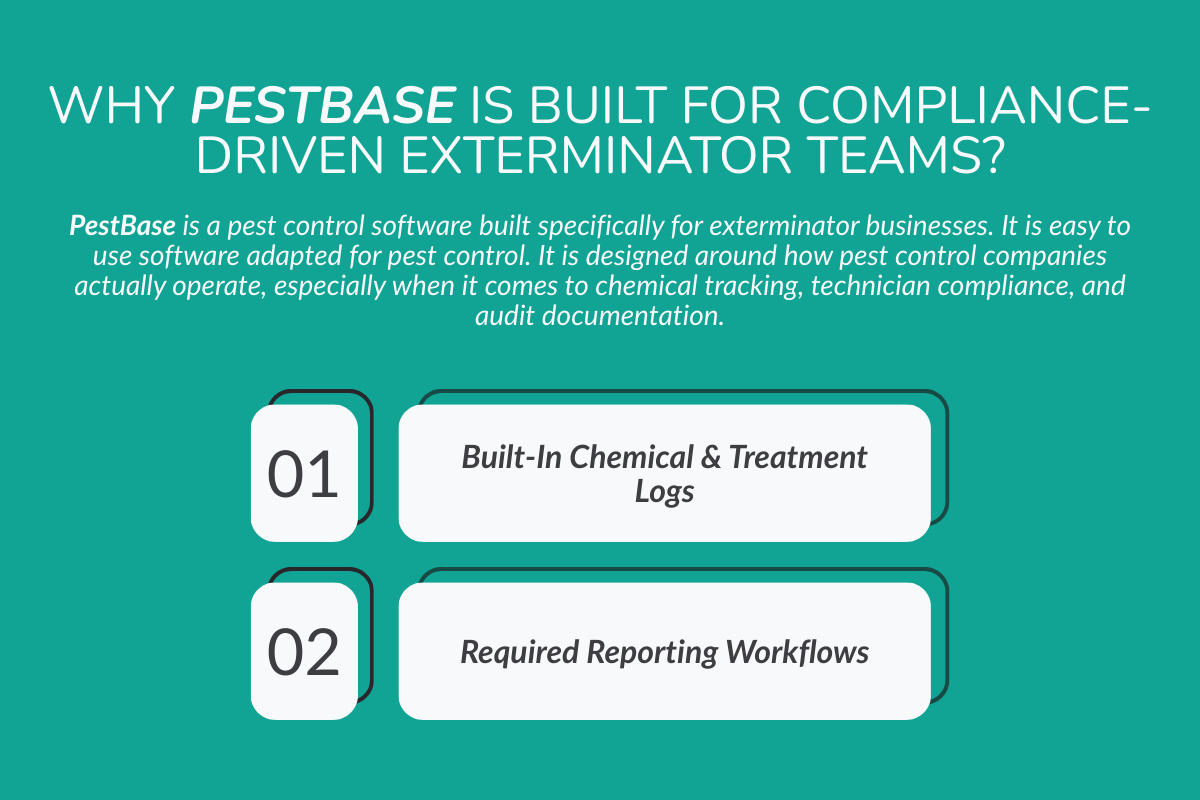
PestBase is a pest control software built specifically for exterminator businesses. It is easy to use software adapted for pest control. It is designed around how pest control companies actually operate, especially when it comes to chemical tracking, technician compliance, and audit documentation.
1. Built-In Chemical & Treatment Logs
Accurate chemical logging is one of the most critical parts of compliance in pest control. PestBase simplifies this by standardizing how every treatment is recorded, so technicians don’t have to rely on memory or manual notes.
- Built-in chemical database for accurate product selection
- Automatic dosage and quantity tracking
- Time-stamped application records
- Complete treatment history per customer
This ensures your pesticide logs are structured, consistent, and ready for inspection.
2. Required Reporting Workflows
Incomplete reports are one of the biggest causes of compliance issues. The software prevents this by enforcing structured workflows that ensure every required detail is captured before a job is closed.
- Mandatory photo uploads
- Required chemical selection before job closure
- Digital customer signature capture
- Standardized reporting templates for all technicians
Techs cannot close a job with missing information, which prevents incomplete reports.
3. Audit-Ready Reports in Seconds
During inspections, speed and accuracy matter. PestBase ensures all your documentation is organized and accessible, so you can respond instantly without scrambling for records.
- Instant export of treatment histories
- Chemical usage reports by date, property, or technician
- Downloadable compliance-ready reports
- Centralized cloud storage for all records
When an inspector asks for documentation, you can provide it in seconds.
4. Technician License & Compliance Tracking
Managing technician certifications manually can lead to missed renewals and compliance risks. PestBase centralizes this process, ensuring every technician meets regulatory requirements at all times.
- Centralized storage of technician licenses
- Renewal reminders and alerts
- Documentation tied to certified applicators
This reduces the risk of expired credentials or compliance violations.
The Bottom Line
In pest control, documentation is not optional. It is part of the job. When your records are complete and timely, they protect your revenue, prove the quality of your work, and keep you safe during inspections.
When they are messy or missing, they create risk. Poor documentation can turn a simple service call into a dispute, a fine, or even a legal issue. Strong documentation does the opposite. It gives you proof, confidence, and control.
The smart move is to use a system that automates and enforces compliance for you. Modern exterminator software like PestBase turns paperwork into a structured process instead of a daily headache.
Documentation Is Either Protection or a Problem
With the right setup, documentation stops being a burden and becomes one of your strongest business protections. Book a demo now.
FAQs
1. How much does pest control software cost?
Pest control software costs will be based primarily on the number of users in your organization and the features you need. Most systems are billed by a technician on a monthly basis, and then will increase in cost if you choose add-on services like compliance logs, logs of chemicals, or automated billing.
2. What is the hardest pest to get rid of?
Many pests are very difficult to get rid of due to their ability to hide and reproduce fast. Bed bugs and termites are the two that are generally identified as the most difficult to eliminate since they can remain hidden in walls, furniture, or structures for a long time. The successful removal of them requires a detailed inspection, documentation style, and regular follow-up applications.
3. What is the highest salary for a pest control technician?
There is a difference in salaries for pest control technicians based on their experience, certification, and where they live. Senior or licensed applicators who treat very complex problems and deal with compliance or regulatory issues generally earn more than an unregistered technician.
4. What do professional exterminators use?
Exterminators utilize regulated pesticides, bait systems, traps, and integrated pest management methodologies to deal with a pest problem. There are strict criteria concerning which chemicals can be utilized, their formulation, dosage, and method of application, ensuring they are safe and legal to utilize.