
March 2, 2026
Every pest control company wants the same thing: technicians who finish more jobs without feeling rushed or burned out. Yet many teams stay stuck at the same daily job count, even when schedules are packed, and trucks are rolling nonstop.
The problem is rarely effort or experience. It is the small delays that add up. Paperwork at every stop. Routes that do not make sense. Call back to the office for missing details. One late job is throwing off the rest of the day.
Exterminator software fixes these hidden inefficiencies. Streamlining scheduling, routing, and field reporting helps technicians move through their day smoothly and complete more jobs without cutting corners or sacrificing service quality.
How Exterminator Software Helps Techs Finish More Jobs Without Rushing?
Exterminator software helps technicians finish more jobs without rushing by replacing slow, manual processes with automated, digital, and optimized workflows.
Talk to almost any pest control company owner or field manager, and you will hear a familiar complaint. The calendar is full, technicians are constantly on the move, yet the number of jobs completed per day barely changes. Everyone feels busy, but the results do not reflect the effort.
This daily ceiling is not caused by slow technicians or a poor work ethic. It usually comes from small inefficiencies that add up fast.
Many assume the answer is working faster. It is not. The real fix is better systems. With the right exterminator software, teams can complete more jobs smoothly while still delivering excellent customer service.
In this blog, we'll understand how exterminator software removes these friction points through smarter scheduling, route optimization, mobile field tools, real-time visibility, and automated documentation.
Key Takeaways
- Technician productivity in pest control is limited more by broken systems than by effort or skill.
- Exterminator software removes friction from scheduling, routing, paperwork, and team communication.
- The right features help teams complete more jobs per day without rushing or sacrificing quality.
- Better visibility and automation turn daily operations into a predictable, scalable process.
Want to see how these efficiency gains look in real life?
If your technicians feel stretched but your job count is stuck, it’s time to fix the systems, not push harder.
See how modern exterminator software helps teams complete more jobs per day with less stress, fewer delays, and smoother operations. Explore how the PestBase can unlock hidden capacity in your field team without rushing a single job.
What Slows Pest Control Technicians Down in the Field?
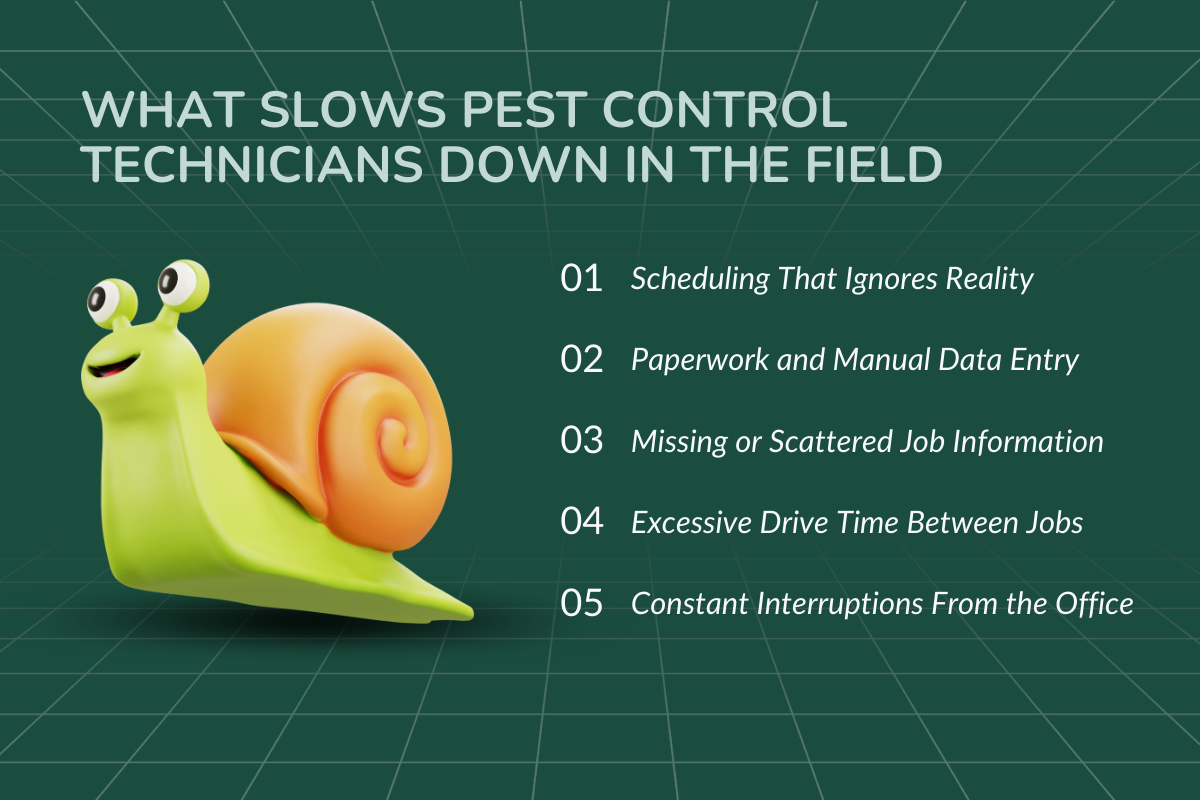
Even the most experienced pest control technicians struggle to stay productive when daily operations are poorly structured. Most slowdowns happen before the first job even starts, not in the field itself.
1. Scheduling That Ignores Reality
On paper, a day might look perfectly scheduled, but in reality, it often falls apart by mid-morning. Jobs are stacked too closely together. Service durations are estimated rather than calculated. A technician skilled in commercial accounts is sent to residential work on the other side of town.
When scheduling does not account for location, traffic, service type, or technician expertise, delays become inevitable. One late job pushes the rest of the day off track. Techs feel pressure, customers feel ignored, and office operations turn reactive.
2. Paperwork and Manual Data Entry
Paperwork is one of the biggest silent productivity killers in pest control. Filling out treatment reports, compliance logs, inspection notes, and invoices by hand adds minutes to every job. Those minutes add up fast.
What's worse is that many technicians still re-enter the same data later or hand paperwork back to the office for someone else to process. That duplicate work wastes time and increases errors. Critical data gets lost or delayed, which affects billing, reporting, and client relationships.
3. Missing or Scattered Job Information
Imagine arriving at a property and realizing you cannot see the last treatment notes, chemical usage history, or special customer instructions. Now the technician has to call the office or guess.
This lack of access often leads to incomplete treatments or missed steps. The result is repeat visits, unhappy customers, and more time spent fixing avoidable issues.
4. Excessive Drive Time Between Jobs
Drive time is unavoidable, but wasted drive time is not. Poor routing sends technicians back and forth across service areas, stuck in traffic, or doubling back for forgotten details.
Every extra mile driven reduces the number of jobs that can be completed in a day. Fuel costs rise, vehicles wear down faster, and technicians spend more time behind the wheel than doing billable work.
5. Constant Interruptions From the Office
Calls and texts from the office often start with small questions. Can you clarify this invoice? Did you apply product X? Can you squeeze in one more stop?
Each interruption breaks focus and multiply that by several calls per day across an entire team, and productivity drops quickly. Technicians end up juggling service and communication instead of focusing fully on the job in front of them
.
How Exterminator Software Restructures the Workday?
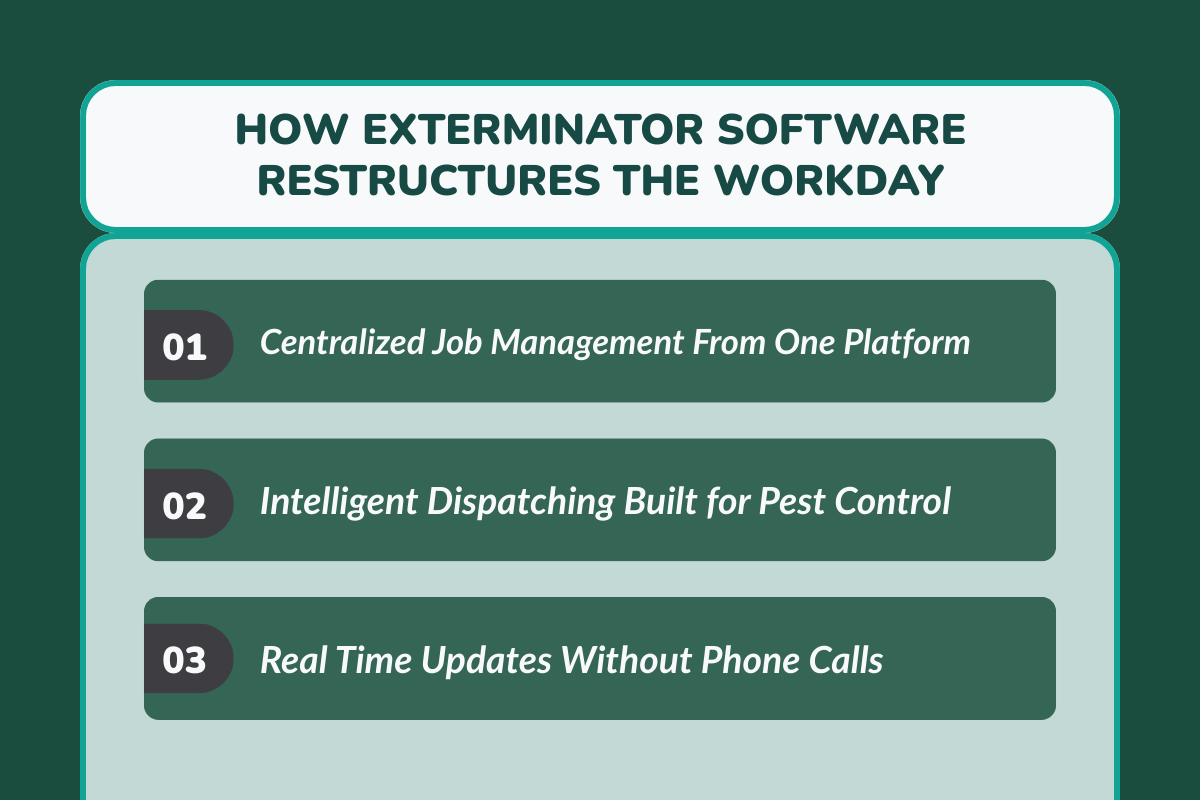
Exterminator software changes how the entire day flows, not just how tasks are tracked. By replacing disconnected tools with a single system, it creates smoother handoffs, fewer interruptions, and more predictable workdays for both technicians and office teams.
1. Centralized Job Management From One Platform
Modern exterminator software brings schedules, customer records, service history, and reports into one system. Instead of bouncing between paper forms, spreadsheets, and phone calls, everything lives in one place.
Technicians access the same information as office staff, whether they are using a mobile app in the field or a desktop in the office. This shared visibility eliminates confusion and keeps everyone aligned.
2. Intelligent Dispatching Built for Pest Control
Not all jobs are equal, and not all technicians are interchangeable. Good pest control software understands this.
Dispatching tools consider proximity, availability, certifications, and service type when assigning jobs. Recurring services, multi-location clients, and commercial accounts are handled with structure instead of guesswork. The result is fewer delays and smoother days.
3. Real-Time Updates Without Phone Calls
When technicians update job status in real time, the office does not need to call for check-ins. Managers can see who is en route, on site, or finished.
This real-time visibility improves communication across the team. Issues are spotted early, adjustments are made quickly, and technicians stay focused on delivering service instead of answering phones.
Explore how high-performing teams rely on exterminator software to improve job visibility, simplify reporting, and reduce friction for daily pest control operations. Exterminator Software for Field Teams: Faster Jobs, Better Reporting.
Completing More Jobs Starts With Smarter Scheduling
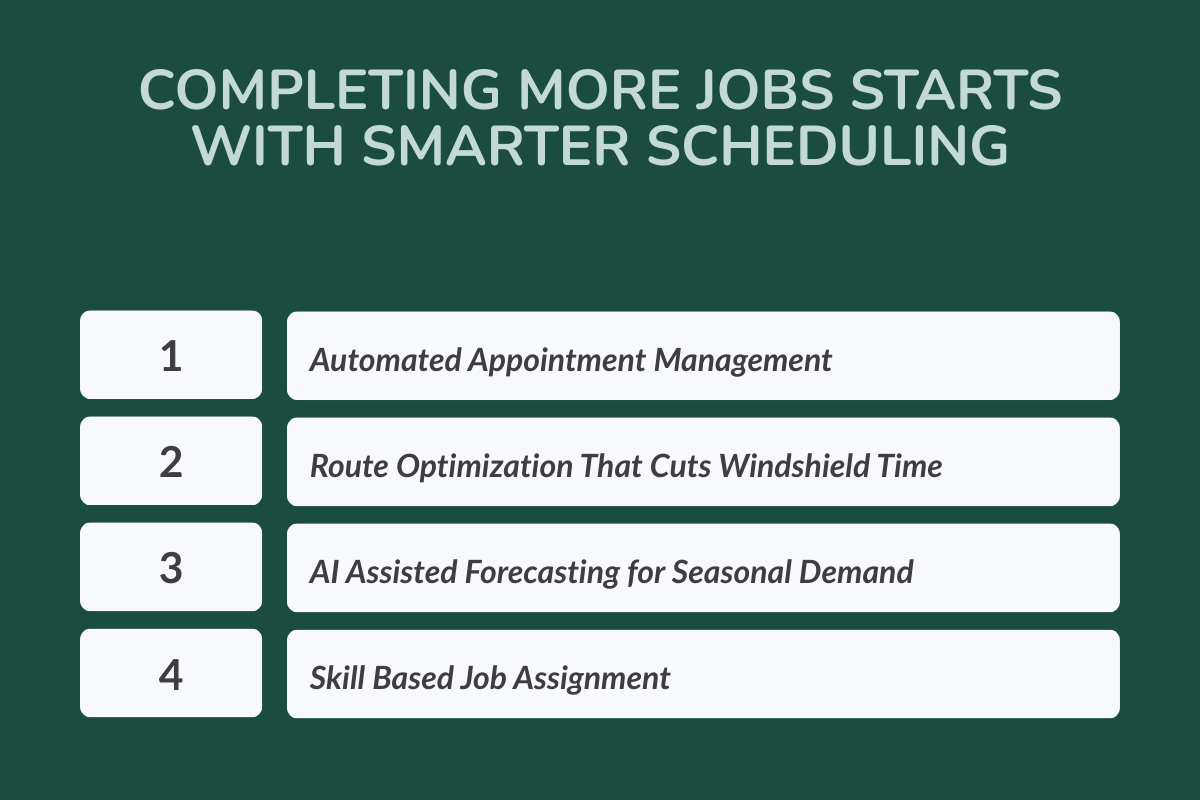
Completing more jobs each day is less about working faster and more about planning smarter. When schedules reflect real service times, routes, and technician strengths, productivity increases without adding pressure to the team.
1. Automated Appointment Management
Instead of relying on memory or static calendars, exterminator software uses defined time blocks for each service type. A termite inspection is not treated the same as a general pest visit.
Accurate scheduling reduces gaps and prevents overbooking. Technicians move from one job to the next with minimal downtime, which directly increases daily job capacity.
2. Route Optimization That Cuts Windshield Time
Routing tools calculate the most efficient path between jobs using GPS and traffic data. Technicians spend less time driving and more time working.
Even small improvements in routing can unlock extra capacity. Cutting ten minutes from each drive can mean one more completed job by the end of the day.
3. AI-Assisted Forecasting for Seasonal Demand
Pest control demand fluctuates with seasons, weather, and local conditions. Advanced pest control software analyzes historical data to help teams prepare.
Moreover, better forecasting allows managers to staff appropriately, adjust schedules, and avoid bottlenecks during peak seasons. Planning ahead reduces chaos and improves efficiency when it matters most.
4. Skill-Based Job Assignment
Assigning jobs based on technician expertise prevents slowdowns and rework. A technician trained in complex treatments completes them faster and more accurately.
This approach improves quality while saving time. Customers also get better outcomes, technicians feel confident, and fewer follow-up visits are needed.
What Are The Mobile Tools That Keep Technicians Moving?
Mobile tools remove the friction that slows technicians down between jobs. When everything they need is available in the field, work moves forward without delays, interruptions, or unnecessary trips back to the office.
I. Full Field Access on Any Device
A strong mobile app gives technicians instant access to schedules, client details, treatment plans, and past reports. There is no need to call the office or wait for paperwork.
Whether they use a phone, tablet, or laptop, technicians stay connected to the system throughout the day.
II. Offline Data Entry With Auto Sync
Many service areas have poor connectivity. Offline access allows technicians to complete jobs without interruption. Once the signal returns, data syncs automatically. Nothing is lost, and the workflow stays uninterrupted.
III. Digital Service Reports and Photo Capture
Digital reports replace handwritten forms. Technicians complete documentation faster and with greater accuracy. Photos add clarity and support compliance. Reports are also consistent across the team, which improves professionalism and trust with clients.
Mobile-first exterminator software keeps techs productive in the field with real-time access to job updates, scheduling, routes, payments, and customer data. Exterminator Software: Why Field-Service Teams Demand Mobile-First Tools.
Reducing Rework With Better Documentation and Compliance
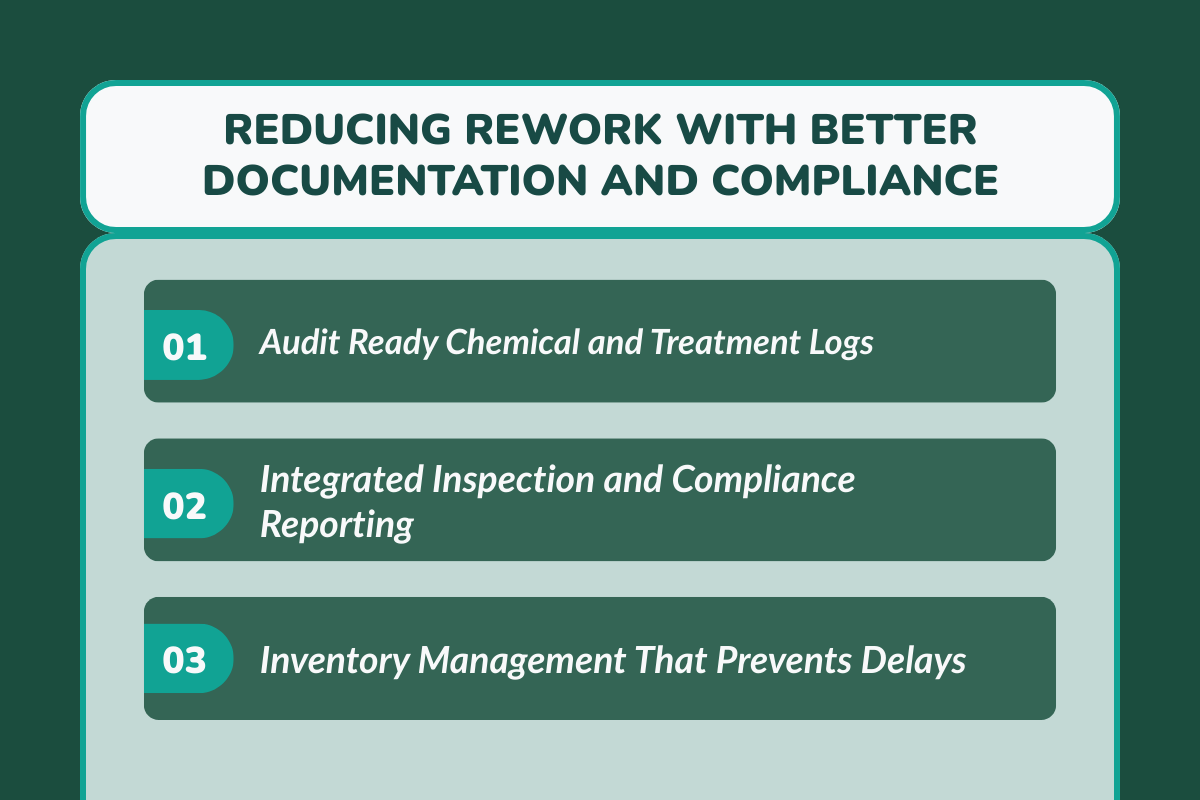
Rework and compliance issues quietly drain time from pest control teams. When documentation is built into daily workflows, technicians get it right the first time, avoiding repeat visits, delays, and regulatory headaches.
1. Audit Ready Chemical and Treatment Logs
Compliance is non-negotiable in pest control. Software tracks chemical usage accurately and stores records securely.
Technicians do not need to remember details at the end of the day. Logs are created as part of the service process, reducing errors and saving time.
2. Integrated Inspection and Compliance Reporting
Digital inspection reports are easy to generate and retrieve. Whether for internal reviews or regulatory audits, everything is organized and accessible. Long-term record storage ensures nothing falls through the cracks as the business grows.
3. Inventory Management That Prevents Delays
Running out of supplies mid-route leads to missed jobs and frustrated customers. Inventory tracking alerts teams before shortages happen.
This way, technicians start the day prepared, which keeps schedules intact and reduces wasted trips back to the office.
Getting Paid Faster Without Slowing Techs Down
Payment delays should never slow down field work, and the right software keeps billing moving without pulling technicians out of their jobs.
> Automated Billing and Invoicing
Invoices are generated automatically once a job is completed. There is no lag between service and billing. Faster invoicing leads to faster payments, and cash flow improves without adding extra steps for technicians or office staff.
> Customer Portals That Reduce Follow-Ups
A customer portal gives clients access to invoices, service history, and reports. Fewer queries are received in the office. This self-service option improves client relationships while freeing up time for both technicians and administrators.
Scaling Job Volume Through Better Customer Experience and Automation
Customer experience and technician productivity are closely connected. When clients are informed, and service history is clear, visits run more smoothly, and more jobs can be completed each day.
1. Automated Reminders That Cut No Shows
Missed appointments waste valuable time. Automated reminders reduce no-shows and last-minute cancellations. Customers know what to expect, and technicians arrive at confirmed jobs.
2. Consistent Service Through CRM Driven Insights
Integrated CRM tools give technicians context. They can see past treatments, preferences, and issues before arriving on site. This preparation leads to faster, more effective service. Problems are solved in fewer visits, which increases overall efficiency.
3. Multi-Territory and Team Management
As pest control businesses expand to multiple locations, complexity increases. Software keeps operations organized across territories. Managers can add technicians without adding office staff. Consistency is maintained, and growth does not overwhelm the team.
4. Performance Reporting That Highlights Bottlenecks
Reporting tools show where time is lost. Jobs per day, route efficiency, and service duration are easy to analyze. With clear data, managers can make targeted improvements rather than guess.
Why PestBase Field Software Fits Pest Control Teams?
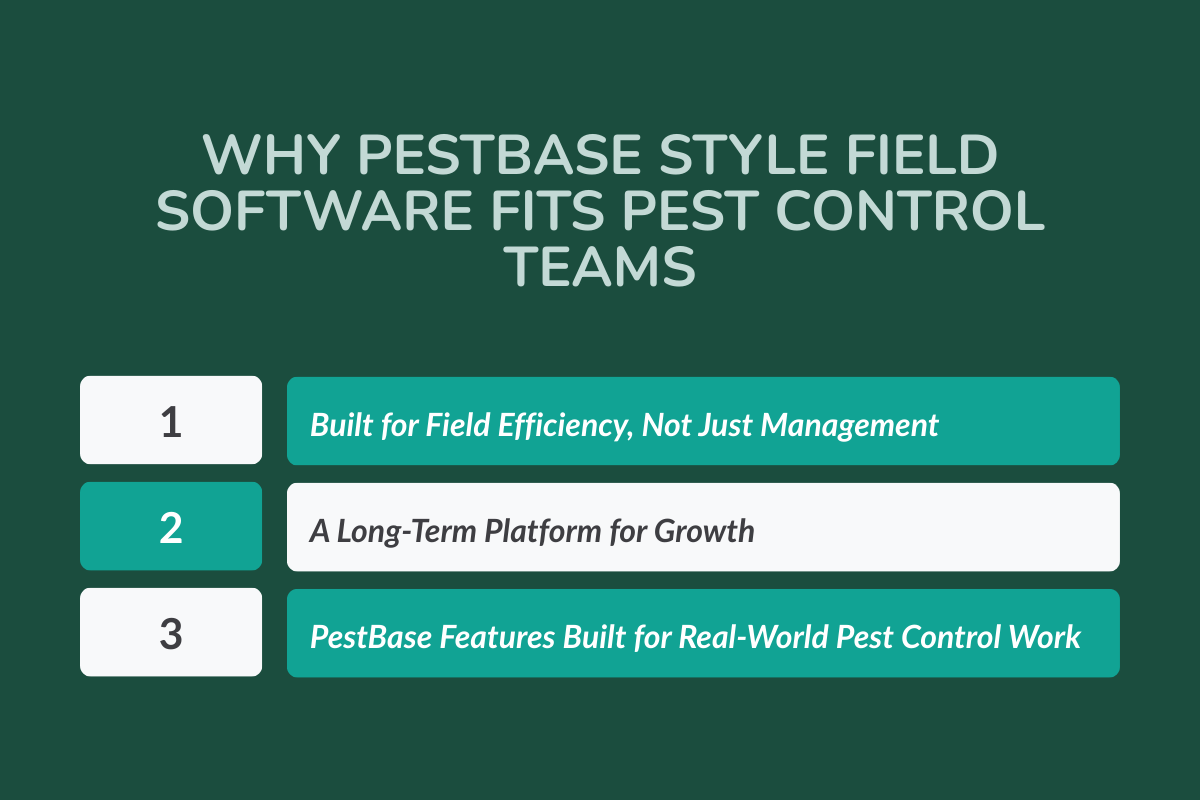
Pest control teams need software that works where the job actually happens. PestBase-style field platform solutions focus on day-to-day execution, making it easier for technicians and managers to stay efficient as the business grows.
Built for Field Efficiency, Not Just Management
Some management software focuses on reports and dashboards but ignores the technician experience. PestBase style platforms are built around real field workflows. They are intuitive, practical, and designed to support daily service without slowing anyone down.
A Long-Term Platform for Growth
As a pest control business grows, complexity increases. The right service software scales with the team. Compliance, billing, scheduling, and customer management stay organized even as job volume rises.
PestBase Features Built for Real-World Pest Control Work
- Centralized scheduling and intelligent dispatching for recurring and one-time jobs: Keeps appointments organized and assigns the right technician to each job based on availability, location, and service type.
- Mobile first technician app with offline access and auto sync: Allows technicians to complete work anywhere and automatically updates records once connectivity is restored.
- Route optimization to reduce drive time and increase jobs per day: Plans the most efficient routes so technicians spend less time driving and more time servicing customers.
- Digital service reports, photos, and chemical usage logs for compliance: Captures accurate, audit-ready documentation during the job without extra paperwork.
- Automated invoicing, payments, and customer portals: Speeds up billing and gives customers easy access to invoices and service history.
Conclusion: More Jobs Per Day Come From Better Systems
Finishing more jobs per day is not about rushing technicians or cutting corners. It is about removing friction from the workday.
When scheduling is realistic, routes are efficient, paperwork is digital, and communication is seamless, productivity increases naturally. Technicians feel supported instead of pressured, and customers receive consistent, high-quality service.
Exterminator software gives pest control teams the structure they need to work smarter. Businesses that invest in better systems do not just complete more jobs. They build stronger operations, happier teams, and a more resilient future.
See How PestBase Helps Your Team Complete More Jobs Every Day
PestBase streamlines scheduling, routing, and field reporting so technicians can focus on service, not admin work. Get a clearer view of daily operations while completing more jobs without rushing.
Book a quick demo with PestBase today and strengthen your business.
FAQ's
1. How does exterminator software help pest control businesses get more customers?
By improving scheduling, response times, and service quality, exterminator software helps businesses handle more jobs efficiently, leading to better reviews, referrals, and repeat customers.
2. Can exterminator software help technicians complete more jobs for new customers each day?
Yes, features like route optimization, smart scheduling, and mobile reporting reduce wasted time, allowing technicians to serve more new customers without rushing.
3. Does exterminator software improve customer experience for first-time customers?
Absolutely. Automated reminders, clear service documentation, and professional reports create a smooth, reliable experience that builds trust with new customers from the first visit.
4. How does better documentation help pest control companies attract more customers?
Accurate digital reports and compliance-ready records reduce mistakes and repeat visits, leading to consistent service quality and stronger word-of-mouth recommendations.
5. Is exterminator software worth it for growing pest control companies focused on new customers?
Yes. As customer volume increases, exterminator software scales operations without adding admin work, making it easier to serve more customers while maintaining service quality.